The Queensland palaeo story
Queensland’s palaeoworld is unlike anything else on Earth. Australia’s long history of isolation has meant evolution unfolded differently here, leaving Queensland to proudly boast some of the strangest and most wonderful creatures found nowhere else, both living and extinct. Each of our unique plants and animals carries a deep-time story written in the rocks as fossils. While these stories are found across the continent, Queensland is special, host to most of Australia’s iconic fossil treasures.
With a record over 1.5 billion years old, Queensland remains the home of many species with ancestry reaching back tens to hundreds of millions of years. Though sometimes called ‘living fossils’ or ‘relicts’, these organisms are anything but; they are survivors, shaped by constant environmental change over immense spans of geological time. Each species and fossil offers a snapshot of how the past shaped the present, writing each chapter in the Queensland palaeo-story.
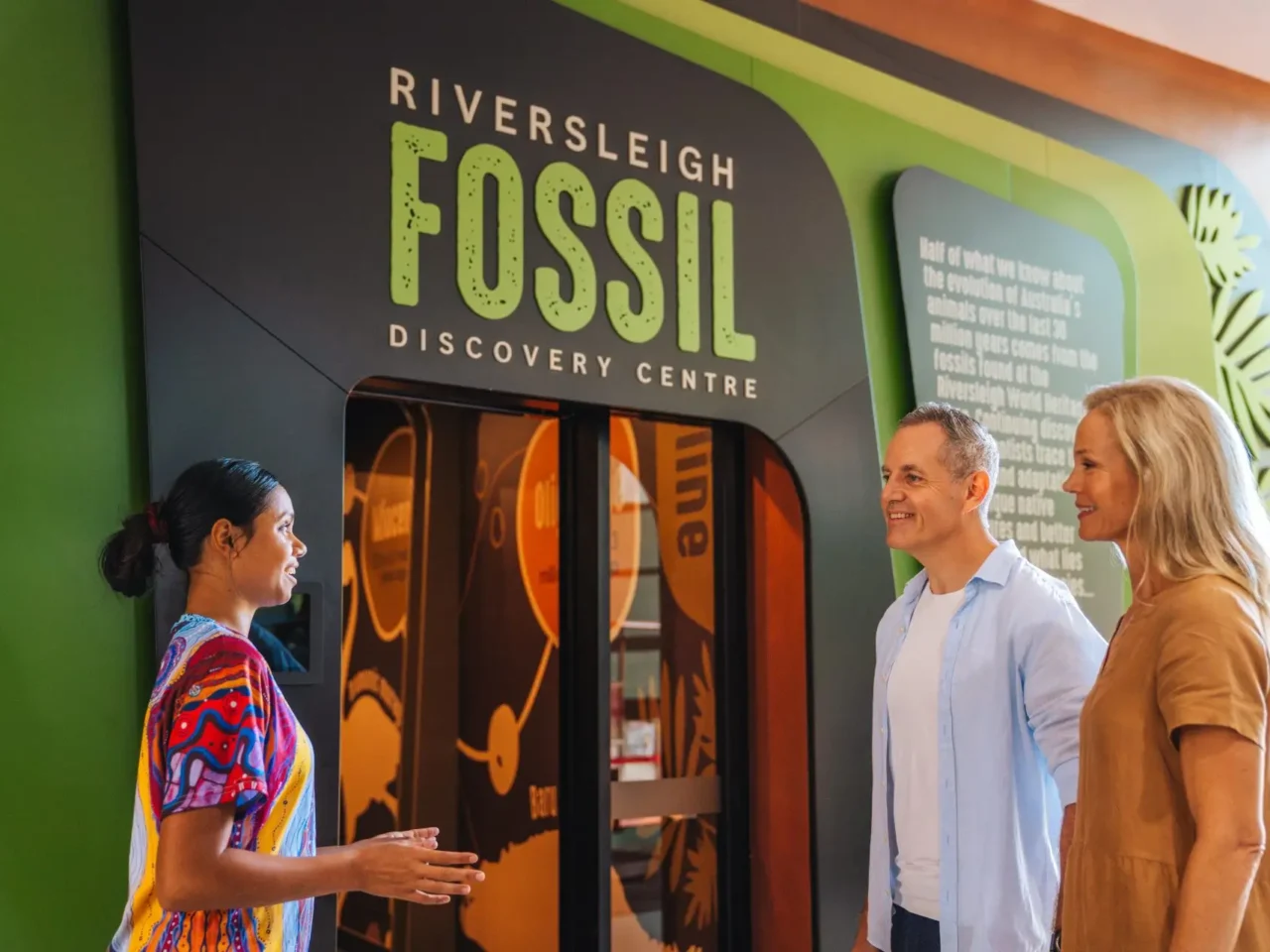
Wherever you travel in Queensland, you are part of the Queensland palaeo-story. The story of our ancient rainforests can be found from the Wet Tropics of the north to the Gondwana Rainforests in the south. Fossil leaves and seeds from the ancestors of towering bunya pines, beech trees, ferns, and cycads can be found alongside the bones of dinosaurs out west in the now-dry Mitchell-grass plains. Meanwhile, the ancestors of our unique rainforest animals, like musky rat kangaroos, platypuses, tree kangaroos and cuscuses are being discovered as fossils at Mount Etna Caves, Capricorn Caves, and the world-famous Riversleigh World Heritage Area.
The story of the Great Barrier Reef is intimately connected to that of the island paradise of K’gari. Eons of interplay between sea-level change, wind, and Ice Ages has created these stunning natural attractions, providing homes for many unique species. Near the headwaters of the Burnett River, the Queensland lungfish survives, its ancestry stretching back long before the dinosaurs. Along the Cassowary Coast, you might even come face to face with a living dinosaur: the cassowary, a species more closely related to Tyrannosaurus rex than T. rex is to a Triceratops!
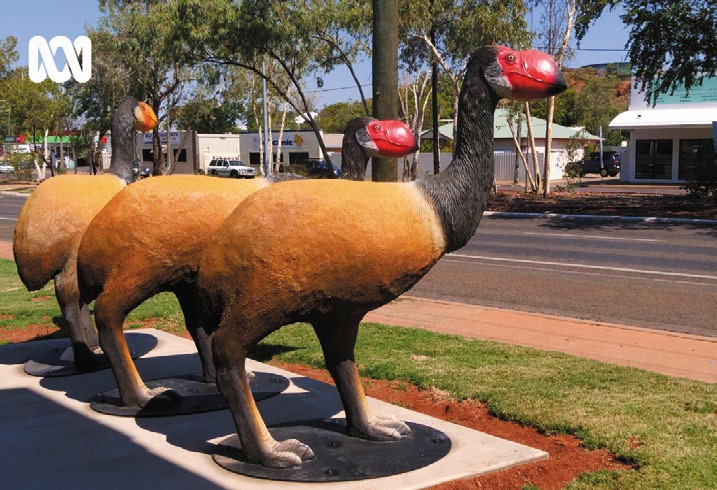
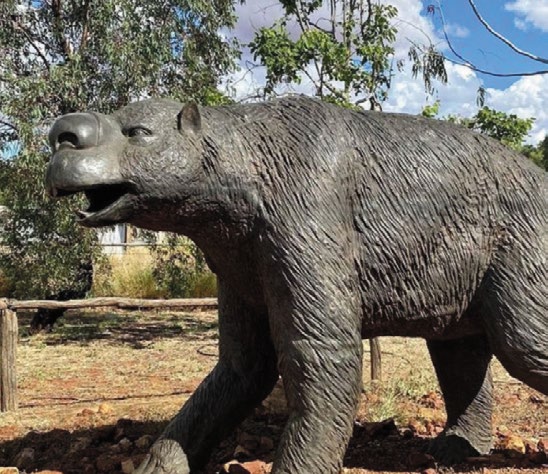
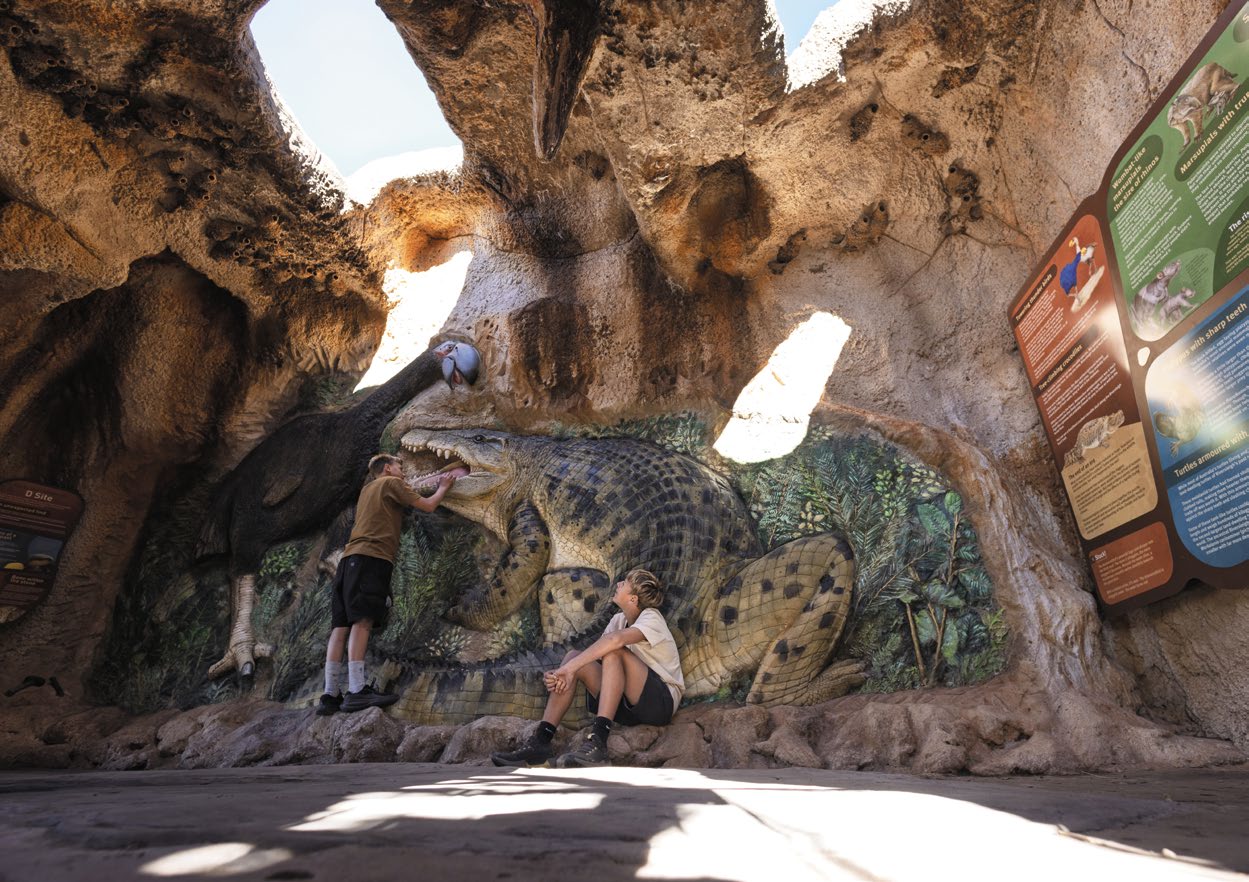
Driving west into Channel Country, you’ll see Australia’s largest living land animals, like kangaroos and emus, but this same landscape once supported giants of far greater size, many of which coexisted with First Nations people for millennia. Three-tonne wombat-like marsupials, six-metre-long venomous goannas, 270kg kangaroos, and marsupial lions all once roamed here.
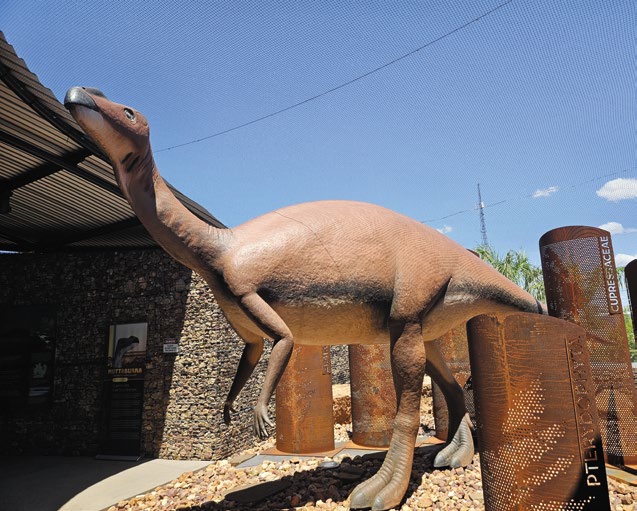
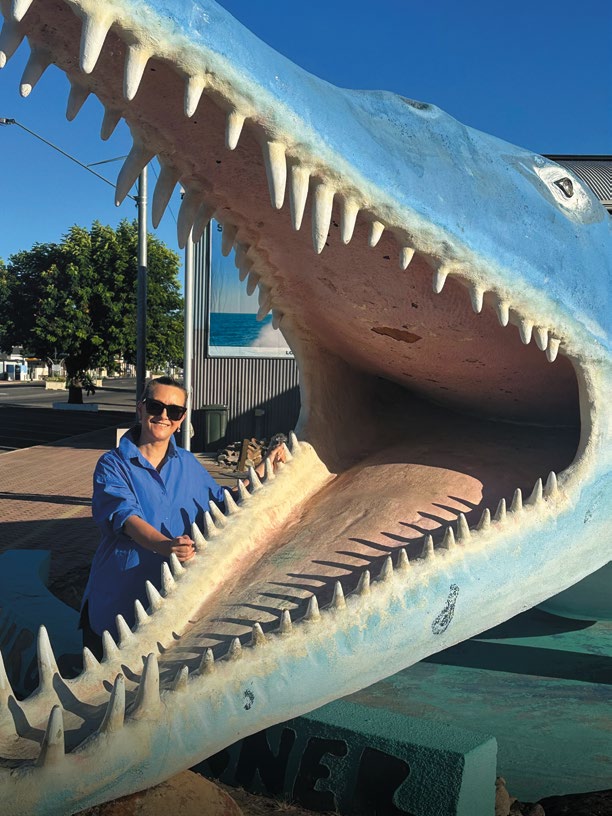
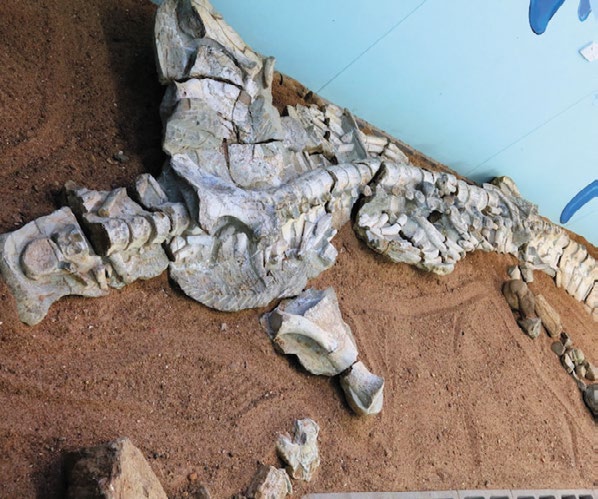
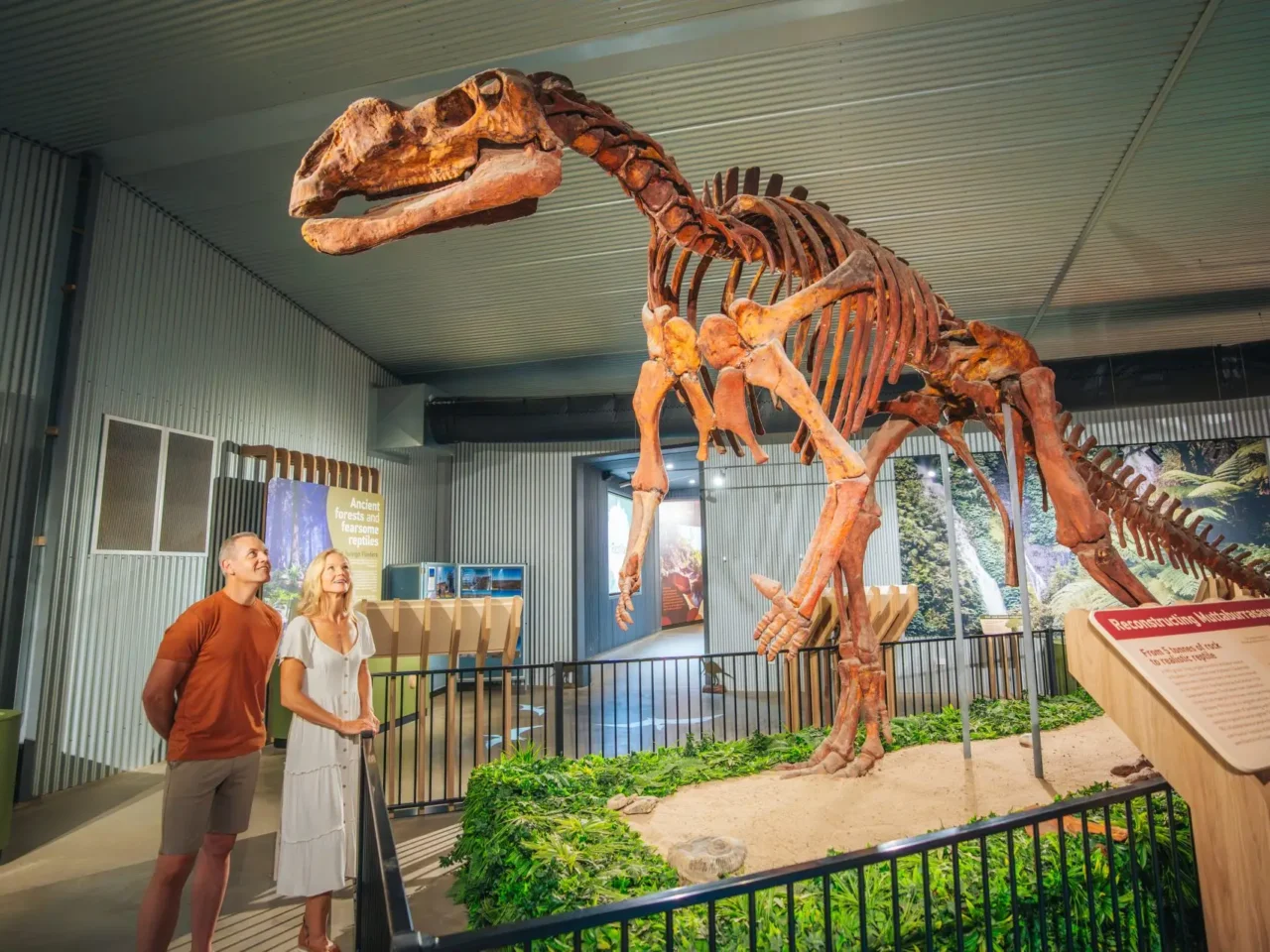
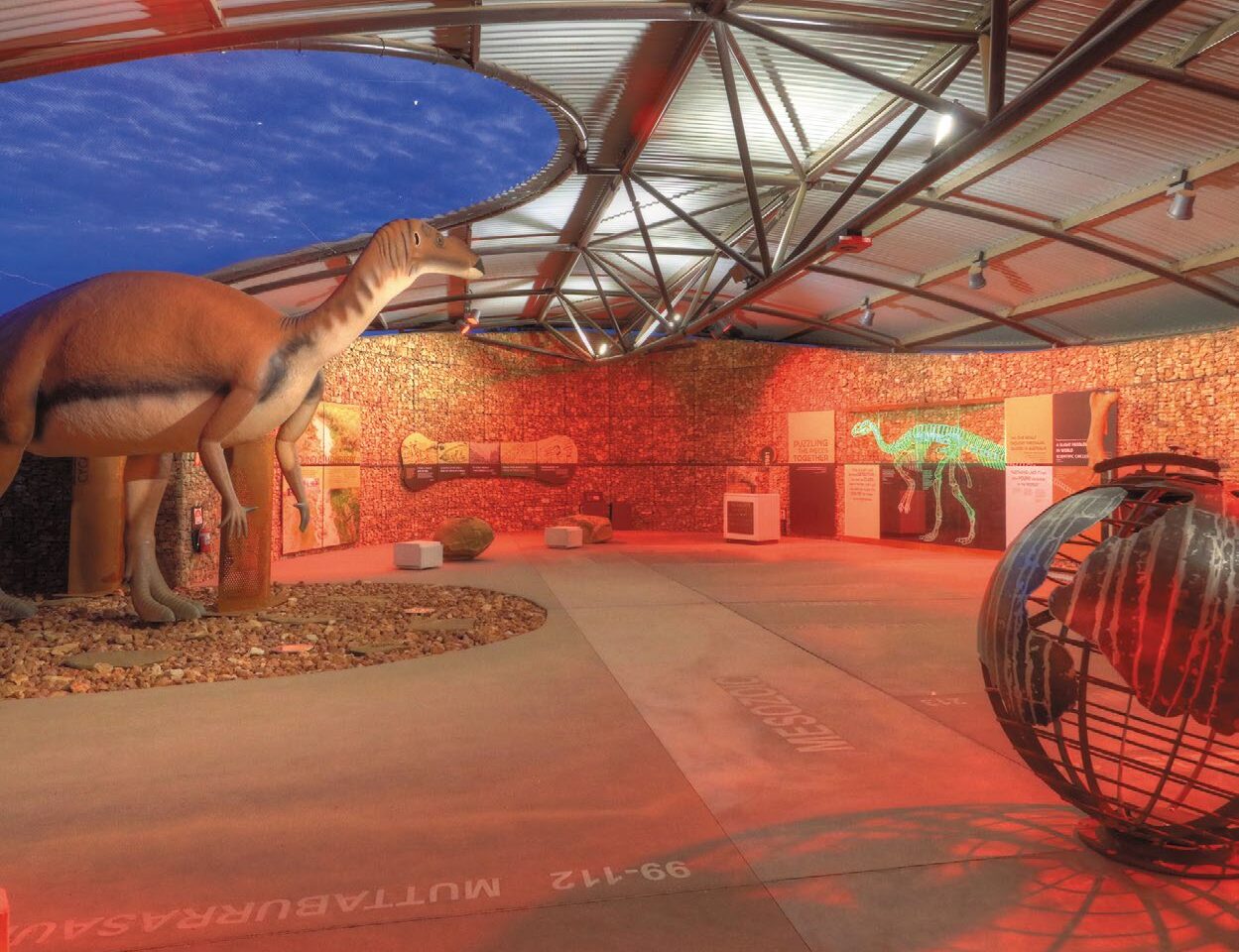
Arriving in Outback Queensland, you are stepping further back to a time when much of central Australia lay beneath the vast Eromanga Sea. Home to archaic fish, giant squid, giant sharks and fearsome marine reptiles unlike anything alive today. In the skies above, pterosaurs hunted, while on land, strange plant-eating dinosaurs lived in the forests fringing the sea. One became our State Fossil Emblem, Muttaburrasaurus langdoni.
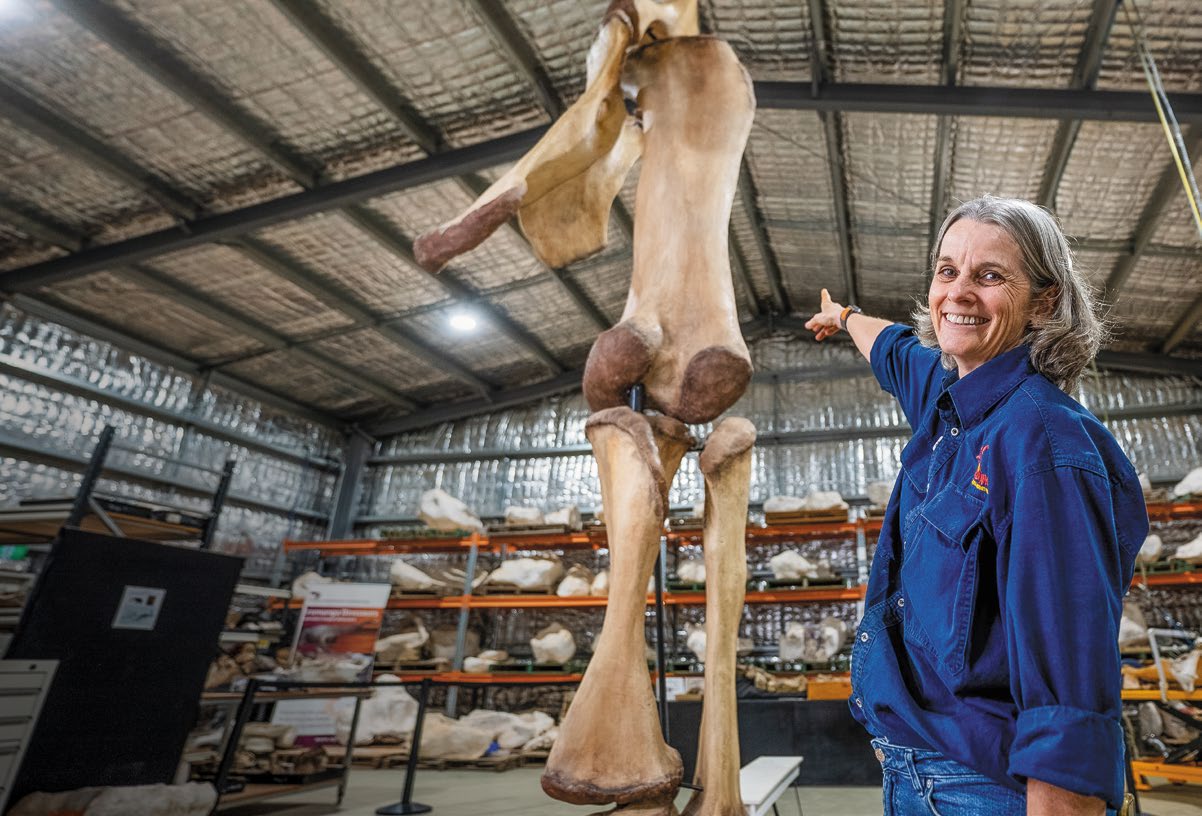
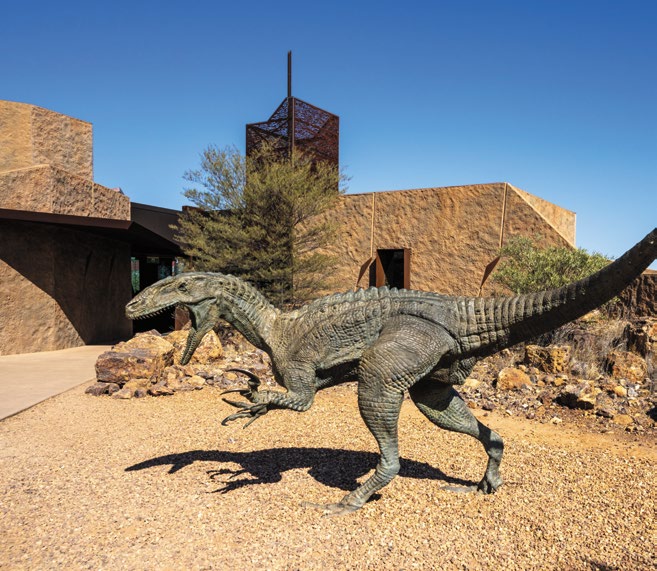
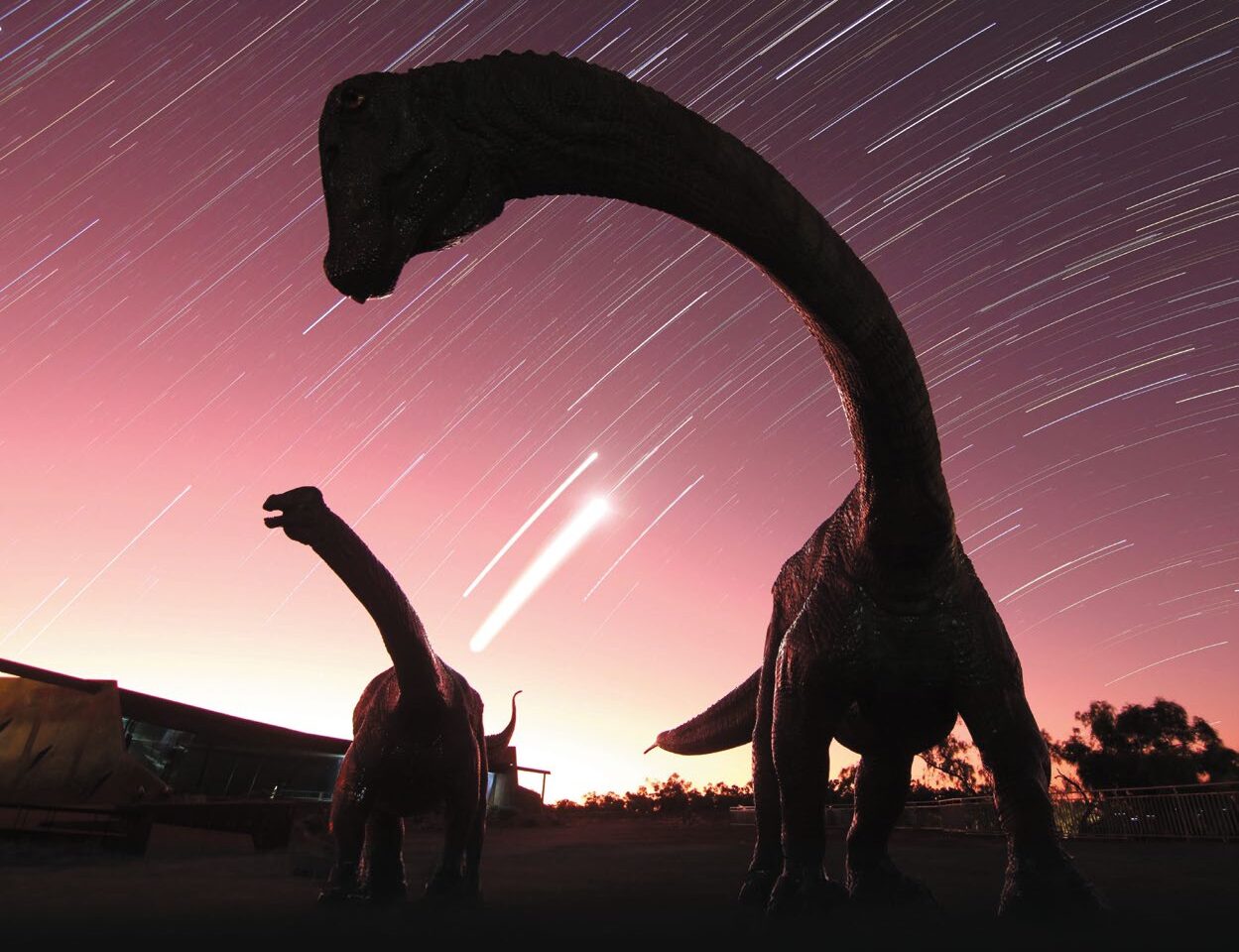
When the sea eventually disappeared, it was replaced by floodplains. Small herds of plant-eating dinosaurs leave their footprints in the mud, stalked by fast, meat-eating theropods armed with razor-sharp teeth and claws. Towering above them, the long-necked titanosaurs of immense size are the largest land animals to ever walk the Outback. Today, their fossilised bones, teeth, claws and footprints tell a story that is waiting for every palaeo-traveller to explore and experience.
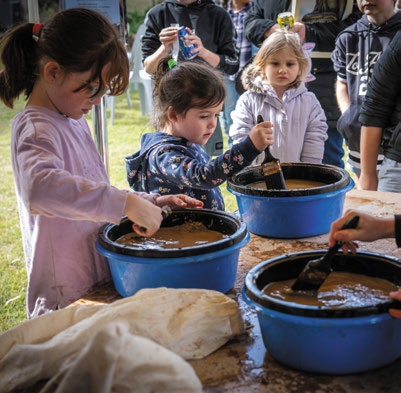
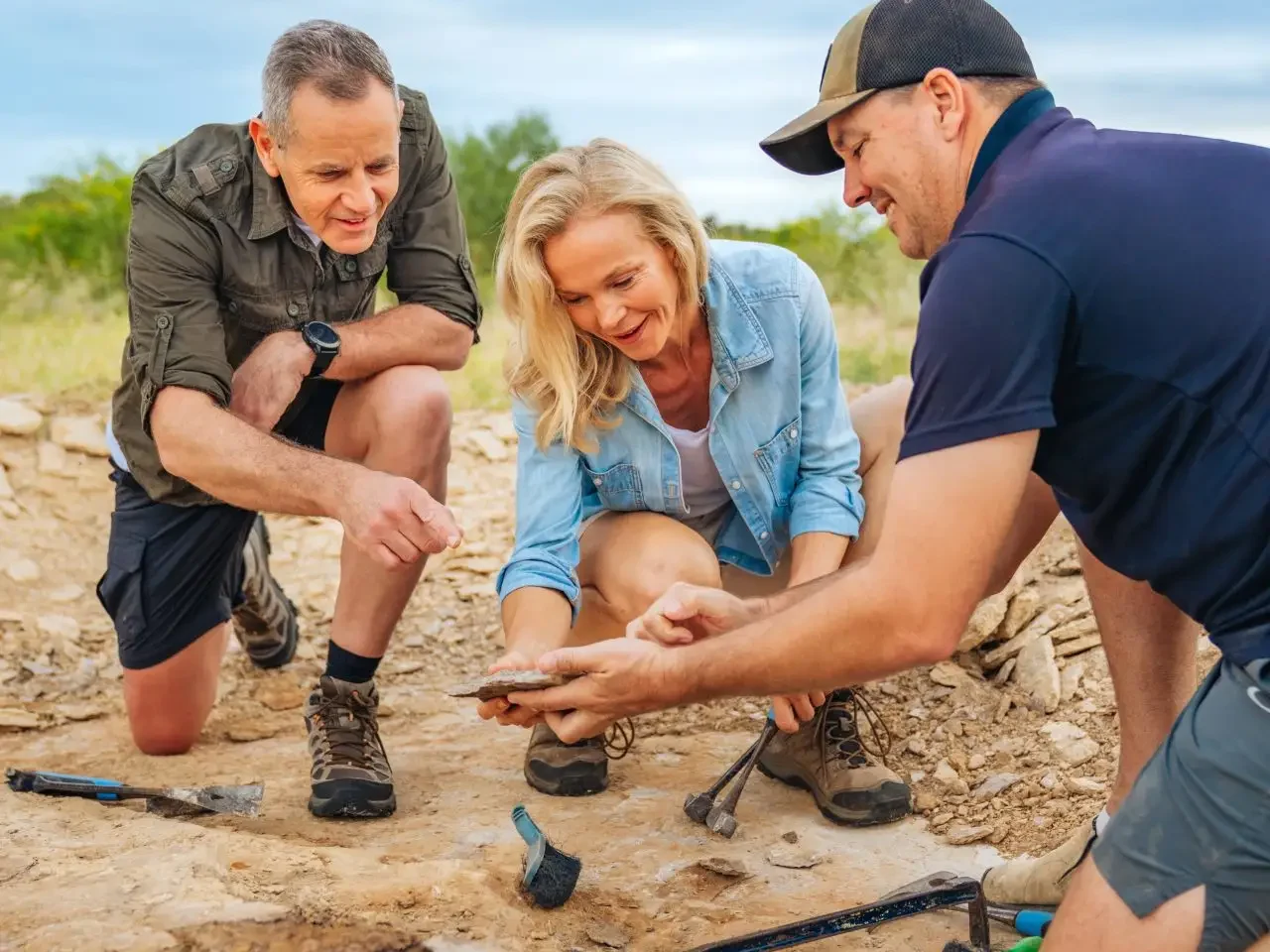
Today, Queensland’s palaeo-stories are being uncovered across our State with each one waiting to be explored, discovered and experienced.